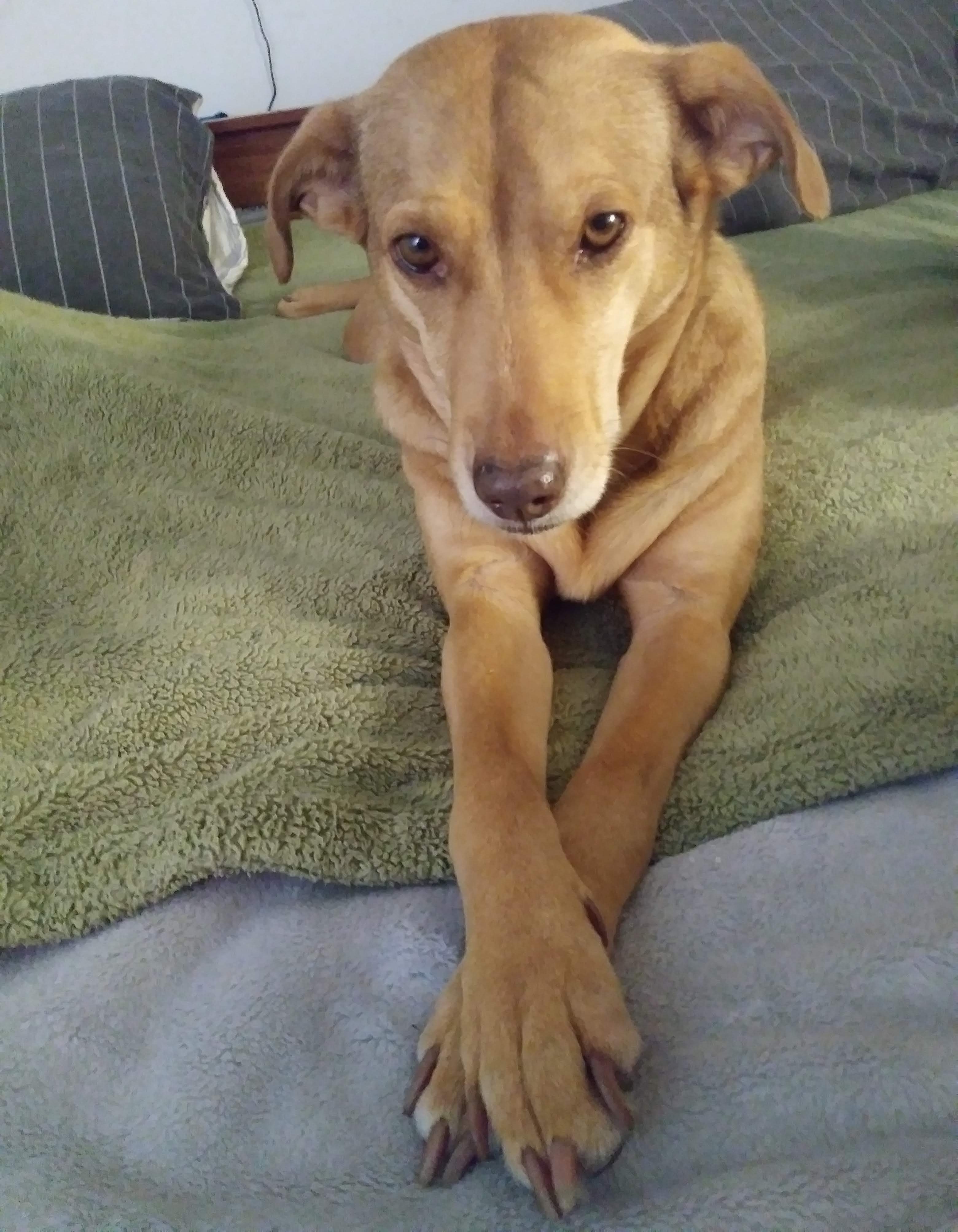
Dog paws are complicated, sturdy, & surprisingly gentle things. Jerry Underfoot & Dot here, reporting live from the sunniest windowsill, sharing what our fursister Olivia taught us with every careful step she took. Olivia padded through almost 15 years (epilepsy & all) on those paws, & they were a big part of how she stayed steady, playful, & kind right up until the end.
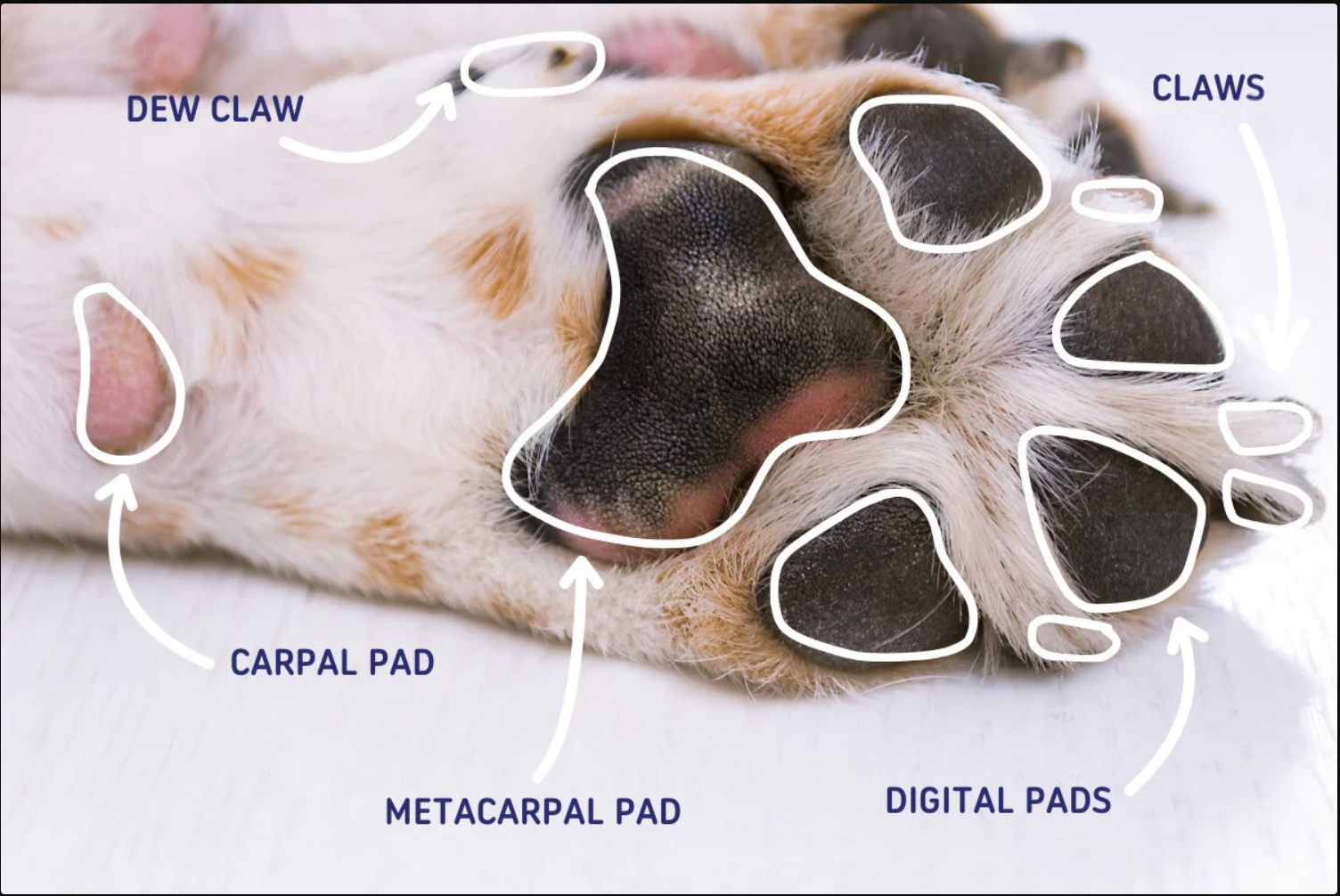
From our vantage point on the back of the couch, we saw that Olivia’s paws weren’t just big soft “thumpers”. They were made of several distinct pawts that each did a job. Her claws, pads, & extra little bits all helped her move safely, even when she felt wobbly.
Olivia’s claws gripped the floor when she walked, turned, or braced herself before & after a seizure, helping her keep some traction instead of sliding everywhere.
Olivia’s toe pads were her four little “beans” per paw, taking the impact every time she trotted to check on us or clacked down the hallway for drinks or playing with her Mighty Gnaw or puzzle game.
Under each front & back paw was a large, heart-shaped pad (central pad) that carried most of her weight & softened the thud of every jump off the couch (a move we did not approve, but admired).
On her front legs, that extra claw higher up (dewclaw) helped her hook toys, steady chews, & sometimes brace herself when she shifted carefully on slippery floors.
Higher on her front legs, the small pad (carpal pad) helped her “pump the brakes” when going down stairs or when she needed to stop fast, especially important when her balance wasn’t pawfect.
We never saw inside Olivia’s paws (thank dog), but we could see the results of what was happening inside: steady landings, careful steps, & a kind of quiet, determined athleticism, even when she was tired. Her paws were little engineering miracles that helped her body cope with epilepsy.
Tiny toe bones & longer paw bones worked together so she could place each foot just where she meant to, especially on stair edges, carpet transitions, & icy sidewalks.
Tendons & ligaments held everything in alignment so her toes could flex & extend without giving way, even when her legs trembled after a seizure.
Under each pad was a springy cushion that helped her absorb shock when she tried to be a puppy again & did zoomies, even as a senior Princess.
Nerves & blood vessels made her paws sensitive enough to feel floor texture & temperature, so she could choose secure footing when she felt unsteady.
Olivia didn’t just walk on her paws; she expressed herself with them. We watched her tiptoe, stomp, & stretch her toes, leaving little clues everywhere she went.
The pad surfaces grew rougher over time, forming a protective layer that let her handle hot sidewalks in summer & freezing patches in winter (although huMom never let her walk when it was too hot or cold or on salt deicers).
On stressful vet visits, Olivia would leave damp pawprints on the exam table, tiny maps of her worry & bravery both.
When she scratched at the door or pawed her favorite blankets, she left her scent behind, saying, “This is mine, this is safe, this is home,” which, by extension meant we were safe too.
Most important, Olivia’s paws taught us how much work it takes just to keep going, & how graceful that work can be. Living with epilepsy meant she sometimes staggered, slipped, or woke up confused but those paws always carried her back to us.
Her pads hit the floor thousands of times a day, even when she felt weak, & every soft thump was a choice to keep trying like the resilient Mighty Warrior Princess she was.
We noticed she would adjust her stance, splay her toes, & move more slowly on bad days, as if she understood that careful paw placement could keep her safer.
Those same paws that braced during seizure events also rested gently on the edge of the bed, near our bodies, or beside our faces when she checked that we were okay.
Jerry here to say Olivia’s paws were loud & large, but they never once stepped on me by accident when I curled close; she always knew where I was.
Dot meowing when I hid under the chair during storms, it was Olivia’s paws I saw first, careful, slow, & steady, coming to lie beside me until the thunder passed.
Now the house is quieter. The familiar rhythm of Olivia’s nails on the floor is gone, & the only paws you hear are ours. But every time Jerry lands softly from a jump or Dot tiptoes around huMom sleeping, we remember what Olivia showed us; paws are not just for walking, they’re for staying, returning, pawtecting, & reaching out.
So from Jerry Underfoot & Dot the next time you look at a dog’s paw, see more than “big stompy feet.” See the whole story of how they move through the world, the illnesses they face, the stairs they conquer, & the loved ones they come back to, again & again, until their last gentle step.
Next week we want to meow on how to care for those purrfect paws🐾🐾
Have a purrfect week!
Remember to be gnawsome, be kind & stay safe,
Dot & Jerry Underfoot😻 head boops 😻
Remembering CEO Olivia & Eddy forever🐾💜🐾
Discover more from Knotty Toys for Good Dogs
Subscribe to get the latest posts sent to your email.

 Knotty Toys for Good Dogs
Such A beautiful explanation of how sweet Olivia’s paw worked. She was quite a girl and I know your Mom misses her tremendously. Wilson & I do too. 💜
LikeLiked by 1 person
Thank you Monika, she does & so do we.
Dot & Jerry Underfoot 😻head boops😻
LikeLiked by 1 person
We all do…Olivia was pretty special
LikeLike
Wee ‘pause’ fore pawss rite Dot an Jerry Underfoot? What a furabuluss post. BellaSita an mee enjoyed it 100% purr cent…An wee loved seein Olivia again…of coarse…
***nose rubss*** BellaDharma an {{hugss}} BellaSita Mum
LikeLiked by 1 person
Thank you my furbulous feline furiend.
Dot & Jerry Underfoot 😻head boops😻
LikeLiked by 1 person