
Did you nose cats use a wide range of sounds to communicate our needs, emotions, & what we want from our humans. Our meows, purrs, chirps, hisses, & yowls, are clues about how we cats are feeling & what we are trying to tell you.
Hi it’s Dot & Jerry Underfoot here to help you learn & recognize our sounds. Doing so, as well as looking at our body language can help you humans better understand us furbulous cats & pawtentionally identify health concerns early so you can seek medical advice before it has pawgressed.
One of the most common sounds we make is Meow. When we do we do so for you humans rather than other cats to get your attention. While when we are kittens we do so to get our mother’s attention.
We cats meow for many reasons, including:
- Greeting a human
- Inviting play
- Expressing excitement
- Showing frustration
- Demanding attention
- Demanding food
- Wanting access to a room or outdoor space
Our meaning depends on the situation, our body language, & the tone of our vocalization.
A lower-pitched, longer, or more persistent meow may sometimes be a way for us to communicate a problem such as:
- Anxiety
- Boredom
- Frustration
- Illness or discomfort
If we begins meowing more frequently than usual or if our vocalizations suddenly sound different, it may be time to contact our veterinarian.
You humans recognize a purr. A purr is a low, continuous, rhythmic sound pawduced when we breathe. We purr when we are happy & content, but did you nose that we also purr when we are stressed, sick, frightened, or in pain. We cats also purr as a self-soothing behaviour during stressful or uncomfortable situations. Remember humans, you should look at our body language to fully understand what our purr means.

Our purr may indicate discomfort or unhappiness if are also showing signs such as:
- Flattened or backward-facing ears
- Dilated pupils
- A tense or hunched posture
- Behaviour that is unusual for us
If you hear a short, high-pitched sound from us that is often used to communicate excitement, attention, or interest in something nearby.
We also make a chirp sounds somewhat like a bird call, which is how it gets its name. A series of chirps is known as chirrups. We did not name this sound, only a human would. When we are kittens our Mother would use chirps as way to communicate with us. Us adult cats may also chirp to get attention or let humans & other animals know where we are. I’m sure you have witnessed us chirp when we spot prey we cannot reach, such as birds, chippies or squirrels outside our window. In this case, chirping reflects our excitement combined with a degree of frustration because we can see the prey but cannot hunt it.
We also like to trill, yes that’s right, trill. It is similar to a purr but at a much higher pitch & softness to our voice. We use this furiendly sound to greet you humans. Trilling is an expression of a pawsitive social interaction. We trill to say hello especially when you come home or when you play with us. Then there is the trill for thanking you humans for a snack or the kind of affectionate attention we pawfer. Trilling is associated with pawsitive emotions & social bonding.
Growling or hissing however has the opposite meaning of trilling. It is used by us cats as a warning sound when we feel threatened, frightened, uncomfortable, or defensive. We may also display our feeling with:
- An arched back
- Flattened ears
- A twitching tail
- Puffed-up fur
- The classic “Howlloween cat” posture
When we are growling or hissing we advise you
- Stop the interaction immediately.
- Give us space.
- Avoid picking up or restraining us cats.
- Most impawtantly, remove the source of stress if pawssible.
If we are hissing at another animal, object, or environmental trigger, safely remove or distance the perceived threat as soon as you can. Never, we means this with all due seriousness, never attempt to force yourself on a growling or hissing cat. We are frightened & will likely scratch or bite you because we feel cornered or unable to escape.
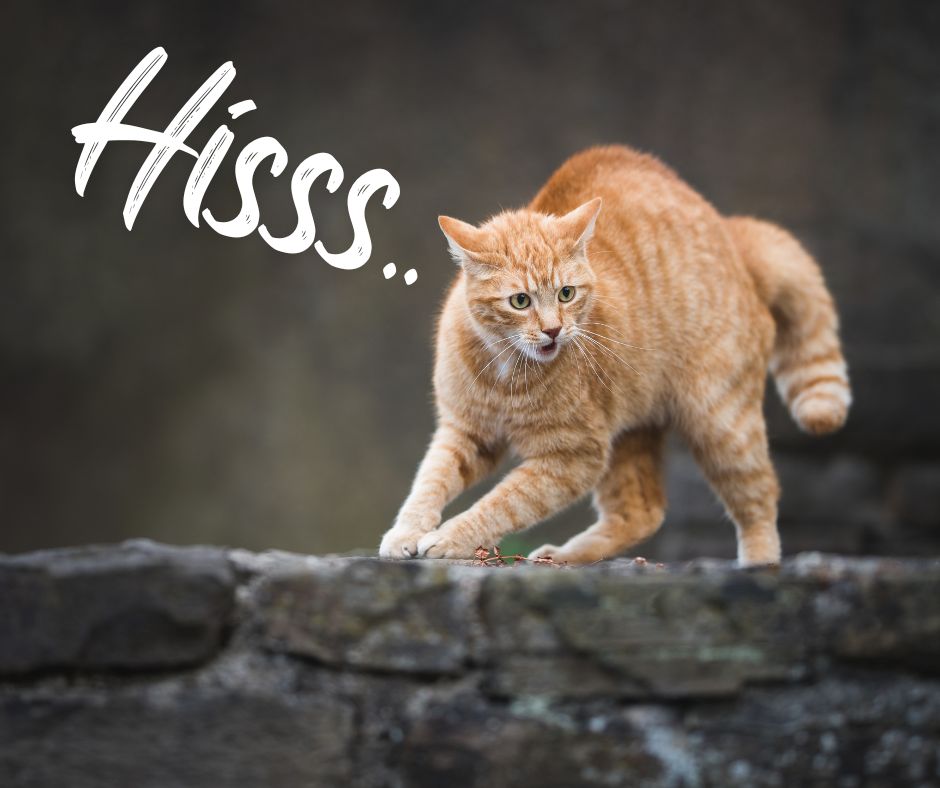
A Spit is much more than a hiss & is a reflex we can’t help when startled or feel in danger. It’s a short, explosive burst of noise usually accompanied by a quick claw paw. We may hiss, puff up our fur, hiss & have a defensive body posture such as ‘Howlloween Cat’.
If we are spitting, immediately stop what ever is happening & give us space. Don’t try to pick us up or restrain us. That would only escalate to us scratching or biting you. Just let us leave the situation & find a safe place to unwind.
The last sound we would like to meow about is our Yowling & or howling. We use these sound when we feel physical discomfort, emotional distress or other substantial stresses. Our yowl sound is a loud, drawn-out meow, while our howl is somewhat similar but much shorter in length. Us cats may yowl or howl when we feel pain or illness, anxiety or worry, frustation, boredom, confinement or environmental stress & should be taken seriously.
We cats will yowl when you humans are away & some of us do experience separation anxiety.
Those of us cats that are considered seniors may yowl because of cognitive dysfunction syndrome, a condition similar to dementia in you humans. Confusion, disorientation, & altered sleep-wake cycles can contribute to a senior’s increased vocalization.
Now not all yowling & howling are signs of illness. We cats may also use howling & yowling to:
- Warn other cats away from our territory
- Communicate during territorial disputes
- Attract potential mates
- Pawrticipate in mating-related rituals
Unneutered cats especially like to yowl as part of their dating communication.
Because we nose yowling can be caused by pain, illness, anxiety, or cognitive decline, any new or unexplained increase in these sounds should be dogscussed with our veterinarian.
Oh, Dot just reminded me of another sound us cats may make (not that she has ever made this kind of sound), that is caterwauling. Caterwauling is a loud, drawn-out vocalization most known with unspayed female cats in heat, but it can also signal pain, fear, discomfort, or cognitive decline.
This cat sound is a long, mournful whine. It’s one of the loudest sounds us cats can make. Caterwauling can occur in a many situations & should always be weighed against other behavioural signs.
The bottom meow is, different cat sounds have different meanings. However, if you humans notice a sudden change in our vocal behaviour, don’t ignore it. Changes in intensity, duration, frequency, pitch or pattern could mean we are experiencing pain, illness, anxiety, cognitive dysfunction or other medical or behavioural issues.
If us cats begin to vocalize more than usual or meow new sounds that are out of character, call our vet & make an appointment for us. Some of us cats may require treatment for pain, anxiety, or underlying medical conditions to address the cause of this new meow sound we are making.
Meow now! That was a lot to unpack. Ohhh, is there an empty box now Dot asked. Sadly, I had to tell her no, there is no box with this kind of unpacking.
Next Saturday is my (Jerry Underfoot) MeowDay! 🎶🎂🎶🐾💜🐾
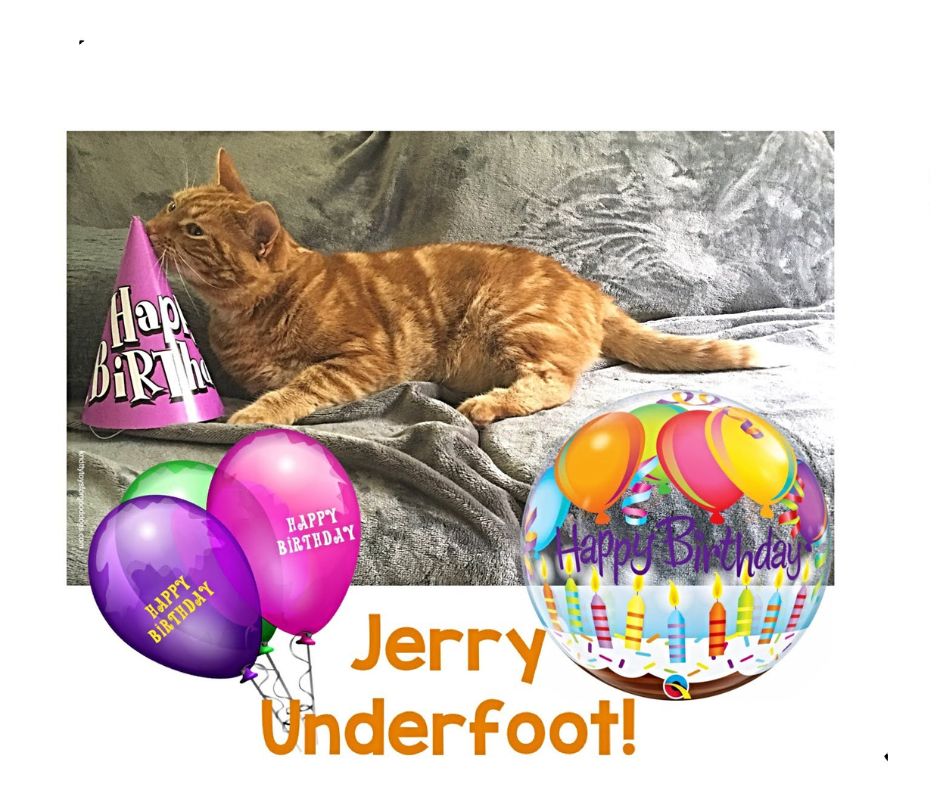
We will be offering 30% OFF on all Cat Toys starting July 11th to July 18th! Use this code: JerryUnderfoot
Remembering CEO Olivia & Eddy forever🐾💜🐾

PS 🐾 Looking for wagnifient healthy & furbulously fun toys or pawsibly a supplement for the well being of your pawtacular good dog or cat? Shop Naturally
Join my pack at knottytoysforgooddogs.com
Discover more from Knotty Toys for Good Dogs
Subscribe to get the latest posts sent to your email.


**trilling at you Jerry** What a furabuluss post!!! You covurred efurry sound wee make so well. So wee catss DUE caterwaul? Wee did not nose this…
Dot you are so beeuteefull an look like you cuud bee ‘angel’ Unkell Siddhartha’ss Sistur….
Wee hope youss an Miss J have a fine weekend there.
***nose rubss*** BellaDharma an (((hugss))) BellaSita Mum
LikeLiked by 1 person
Thank you BellaDharma.
Dot thanks you for the meowsome compliment 🐈⬛
😻head boops😻
LikeLiked by 1 person
Thanks, guys. And a very happy early MeowDay to you Jerry Underfoot.
LikeLiked by 2 people
Thank you for the birthday wishes😻
😻head boops😻
LikeLike